Loading article
Loading page
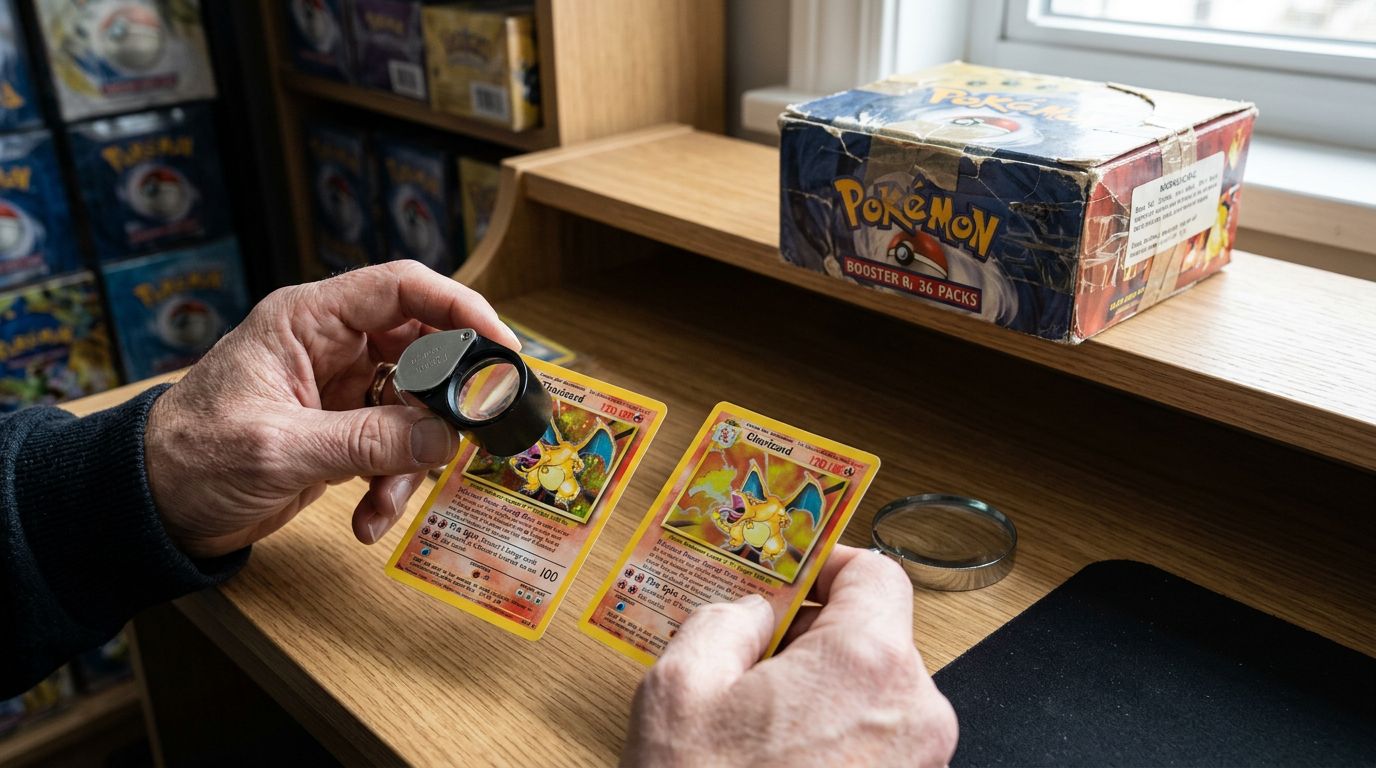
Fake Pokemon cards are one of the fastest ways for a collector to lose money and confidence. Some fakes are obvious: blurry artwork, strange colors, flimsy card stock, or a back that looks completely wrong. Others are more dangerous because they imitate expensive vintage cards, chase cards, graded slabs, or sealed products.
This guide covers the biggest red flags collectors should know before buying, trading, grading, or opening Pokemon cards. It is written for practical use: what to look for, what questions to ask, and when to walk away.
Most fake cards fail in one or more of these areas:
One red flag does not always prove a card is fake, but several together are enough reason to stop.
Real Pokemon cards have a consistent paper feel. They should not feel like printer paper, plastic, laminated cardboard, or glossy photo stock. Many counterfeits feel wrong as soon as you hold them because the card stock is too flimsy, too slippery, or too stiff.
Do not bend, tear, or damage a card to test it. The old light test and rip test can damage real cards and are not reliable enough for valuable collectibles. Use safer checks first: compare the card to a known real card from a similar era, inspect print quality, check the back, and confirm the exact version.
Card stock can vary between eras, languages, and print runs, so feel alone is not enough. It is one clue, not the whole case.
Holo patterns are one of the biggest tells. Fake holo cards often use generic rainbow foil that shines across the entire card in the wrong way. Real Pokemon cards use era-specific holo treatments, and modern textured cards should have texture that matches the real card.
Watch for:
For expensive cards, compare against verified photos or videos of the same exact card. A Charizard, Umbreon, Pikachu, or Lugia chase card can have many versions. Compare the correct one.
Counterfeit cards often get small typography details wrong. The font may look close at first, but the spacing, weight, alignment, or symbols feel slightly off.
Check:
Many fake cards are made from low-quality scans. That can make text blurry, fuzzy, or uneven. Real cards should have crisp print, even on small text.
The back is one of the best places to catch fakes. Pokemon card backs have a familiar blue tone, border, Pokeball graphic, and swirl pattern. Fake backs often look too purple, too dark, too bright, too blurry, or poorly centered.
Compare the back to a real card from the same language and era. English, Japanese, and other regional cards can differ, so compare like with like.
Red flags on the back include:
If the front looks convincing but the back looks wrong, walk away.
Vintage cards are frequent counterfeit targets because small details can change value dramatically. Base Set first edition, shadowless, and unlimited cards can look similar to beginners, but the market treats them very differently.
Common vintage fake issues include:
Do not buy an expensive first edition or shadowless card without checking the exact print differences. If the seller cannot provide clear front, back, stamp, and holo photos, that is a problem.
Modern chase cards are also heavily faked because demand is high. Special illustration rares, alternate arts, full arts, gold cards, rainbow cards, and popular character cards are common targets.
Modern fakes often fail on texture. A real textured card should have raised texture that catches light and follows the design. A fake may show texture as a flat printed pattern. Other fakes use the wrong foil, wrong set number, or wrong back color.
Be extra careful with raw copies of very popular cards sold far below recent market price. A cheap card is not always a bargain. Sometimes it is the warning.
Fake slabs are one of the biggest risks in high-value collecting. A slab can look official enough in a quick photo, especially if the scammer copies a real certification number from an authentic card.
Always check the cert number with the grading company when possible. For PSA cards, use PSA Cert Verification and compare the cert result to the slab in front of you: card name, year, set, grade, label style, and any available images or data.
Cert verification is important, but it is not a magic shield. A real cert number can be copied onto a fake label. You still need to inspect the slab, label, card, and seller.
Fake slab red flags include:
If you are buying a high-value slab, compare it against known authentic holders from the same grader and label era.
Fake cards are not the only risk. Sealed products can be resealed, searched, weighed, or completely fake. This matters for booster packs, boxes, elite trainer boxes, collection boxes, and older sealed products.
Watch for:
For expensive sealed products, buy from trusted sellers, ask for detailed photos, and compare packaging against known real examples.
Price is one of the biggest signals. If a card normally sells for hundreds of dollars and a seller offers it for a fraction of that with urgency, pressure, or vague photos, slow down.
Be careful when sellers:
Scams often rely on speed. The seller wants you excited before you think. Good collectors slow the purchase down.
Use this process before buying anything expensive:
If the seller will not provide enough evidence, do not buy.
Do not panic. Start by documenting everything.
Take clear photos of the front, back, close-up text, holo area, set symbol, card number, and any slab label. Save the listing, seller messages, payment records, and shipping details. Compare the card to verified examples. If it is graded, check the cert number with the grading company.
If the card was bought through a marketplace, use the marketplace dispute process. Do not alter the card. Do not damage it to run a test. Keep the packaging until the issue is resolved.
For high-value cards, consider professional authentication or buying only through services that include authentication protections.
Collectors do not just need excitement. They need confidence. TOKIO is useful because it is built around collection context: graded-card reveals, inventory details, vaulting, estimated value, and decisions after the reveal.
A collector should be able to understand what they received, why it matters, and what choices they have next. That matters even more in a hobby where counterfeits, fake slabs, resealed products, and bad listings can confuse buyers.
TOKIO does not replace collector knowledge. It makes the ownership flow clearer. The better you understand fake-card red flags, the better you can appreciate why grading, cert context, and transparent inventory details matter.
Do not let the price make the decision for you.
If a deal looks too good, if photos are weak, if the seller avoids questions, or if the card has multiple red flags, walk away. There will always be another card. The best collectors protect their budget, their collection, and their confidence.