Loading article
Loading page
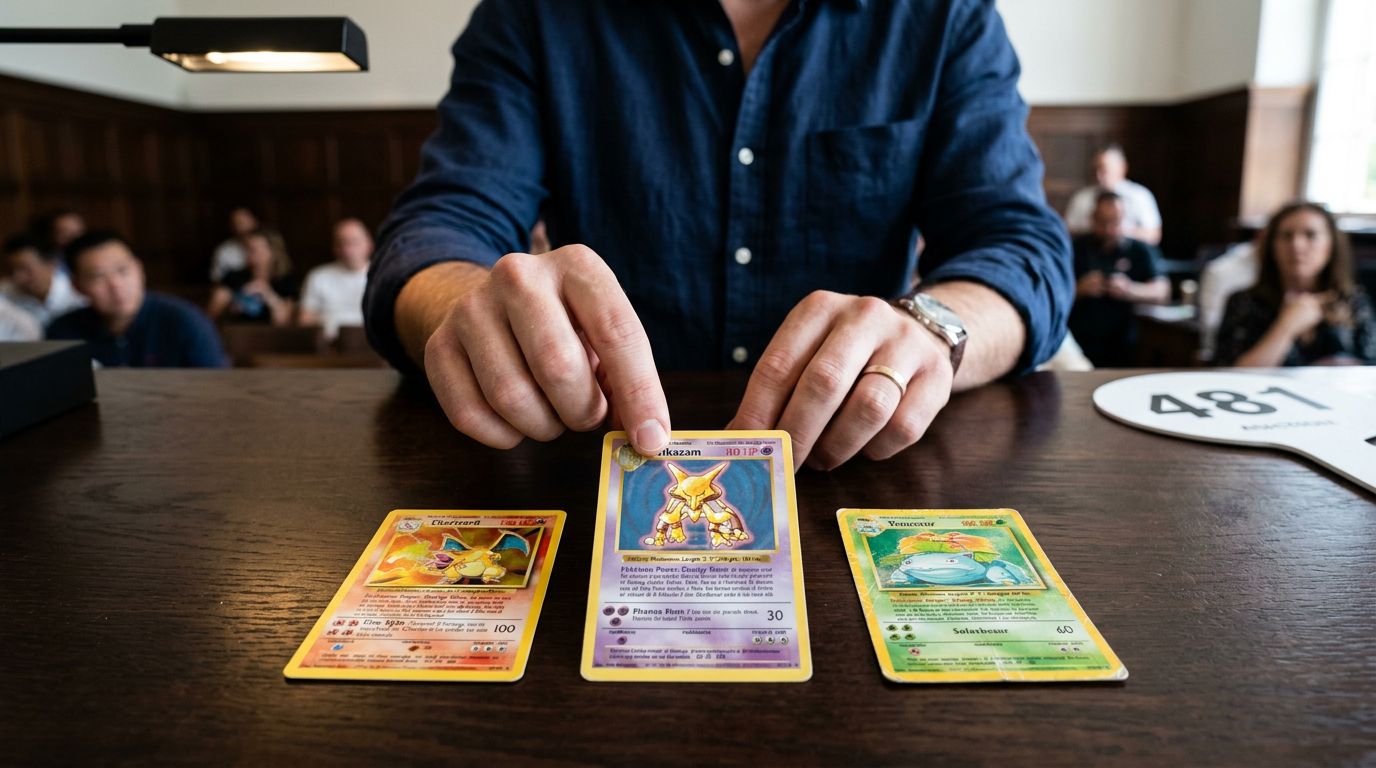
Condition is one of the biggest reasons two copies of the same Pokemon card can have completely different values. A card can be rare, popular, and old, but if it has whitening, scratches, dents, creases, or heavy surface wear, the market will treat it very differently from a clean copy.
This guide explains the condition language collectors use most often: Near Mint, Lightly Played, Moderately Played, Heavily Played, and Damaged. It also explains why marketplace condition labels are not the same as professional grades, how to inspect a card properly, and how condition should affect buying, selling, grading, and collecting decisions.
Pokemon cards are small paper collectibles. That makes them fragile. A tiny dent, a surface scratch, a binder-ring mark, or a crease can change the value even if the card still looks good in a sleeve.
Condition matters because collectors pay for confidence. A clean card is easier to display, easier to grade, easier to resell, and easier to compare with recent sales. A flawed card can still be collectible, but the price should reflect the flaw.
Condition also matters because many Pokemon cards are visual collectibles. Foil cards, illustration rares, vintage holos, and textured cards depend on clean surfaces and strong eye appeal. Damage breaks that experience.
Different marketplaces use different language. TCGplayer commonly uses Near Mint, Lightly Played, Moderately Played, Heavily Played, and Damaged. Cardmarket uses a slightly different scale that includes terms such as Mint, Near Mint, Excellent, Good, Light Played, Played, and Poor.
The important lesson is simple: do not rely on the label alone. Read the marketplace guide, inspect photos, ask for more photos when needed, and compare the actual flaws.
A seller may call a card Near Mint. A buyer may see whitening and call it Lightly Played. A grading company may look under magnification and assign a grade that feels harsher than either person expected. Condition is a language, but it is also a judgment.
Near Mint is the condition most collectors want for raw cards. A Near Mint Pokemon card should look clean at normal viewing distance and have only minimal, if any, wear.
A Near Mint card may have very small imperfections, but it should not have obvious damage. The front should be clean, the corners should look sharp, the edges should have little to no whitening, and the surface should not show major scratches, dents, or creases.
Near Mint does not mean perfect. This is where beginners get confused. A raw Near Mint card is not automatically a PSA 10 or CGC 10 candidate. Professional grading is stricter and more detailed than marketplace condition labeling.
Good signs for Near Mint:
Red flags against Near Mint:
If you are buying online and the card is expensive, do not accept one front photo in a sleeve. Ask for clear front and back photos outside the sleeve, plus angled light photos for foil cards.
Lightly Played, often shortened to LP, means the card has visible wear but still presents well. Many collectors are happy with Lightly Played cards for binders, especially when the card is expensive in Near Mint condition.
A Lightly Played card might have minor edge whitening, small scratches, light corner wear, or a few surface marks. It should not have major creases, heavy dirt, deep dents, water damage, or severe surface problems.
Lightly Played can be a smart buying category. If the front looks good in a binder and the flaws are mostly on the back or edges, an LP copy may give you most of the display value for less money.
Common Lightly Played traits:
Where collectors disagree:
For higher-value cards, even Lightly Played has a wide range. A strong LP copy may be close to Near Mint. A weak LP copy may be closer to Moderately Played.
Moderately Played, or MP, means the card has clear wear that most collectors will notice. The card may still be fine for a binder, casual collecting, or completing a set, but it should be priced below cleaner copies.
A Moderately Played card can have more obvious whitening, scratches, surface wear, corner wear, small bends, or general handling wear. It should not be destroyed, but it no longer has the clean look collectors expect from Near Mint or strong Lightly Played copies.
Moderately Played is often where value drops more sharply. Some collectors avoid MP entirely unless the card is vintage, rare, expensive, or hard to find.
Common Moderately Played traits:
MP can still be worth buying when the card is mostly for personal enjoyment. It is usually not a strong grading candidate unless the card is rare enough that authentication matters more than grade.
Heavily Played, or HP, means the card has significant wear. The card may have heavy whitening, strong surface wear, larger bends, dirty edges, serious scratches, or other issues that make the damage obvious.
A Heavily Played card can still have value if it is a major vintage card, a popular character, a scarce promo, or a card that collectors want in any condition. But the buyer pool is smaller, and the discount should be meaningful.
Common Heavily Played traits:
Heavily Played cards are usually binder-fillers, budget copies, or placeholders until a collector upgrades. They are rarely worth grading unless the card is historically important, commonly faked, or valuable even in low grade.
Damaged is the lowest practical condition category. A Damaged Pokemon card has major flaws that clearly affect the structure, appearance, or integrity of the card.
Damage can include creases, tears, water damage, ink, writing, peeling, major dents, missing pieces, heavy warping, severe bends, tape, glue, or other serious issues.
Common Damaged traits:
Damaged does not always mean worthless. A damaged first edition Charizard is still a first edition Charizard. A damaged trophy card, rare promo, or beloved vintage holo can still sell. But damaged cards need honest pricing and clear photos.
The first mistake is judging a card inside a sleeve. Sleeves hide scratches, dents, and surface marks. They also create glare that can make edge wear harder to see.
The second mistake is looking only at the front. The back often tells the truth. Whitening, edge chipping, and pressure marks are often easier to see on the back.
The third mistake is ignoring angled light. Foil cards can look clean straight on and show scratches, print lines, dents, or clouding when tilted.
The fourth mistake is assuming Near Mint means grade 10. A Near Mint raw card can come back PSA 7, 8, or 9 if it has hidden flaws, centering issues, surface dents, print defects, or edge wear. PSA grading standards are more granular than casual marketplace language.
The fifth mistake is paying Near Mint prices for weak Lightly Played cards. If the card is expensive, slow down and inspect more carefully.
Marketplace condition and professional grading overlap, but they are not the same thing. A seller might call a card Near Mint because it looks clean, while PSA or CGC may lower the grade because of centering, surface issues, print defects, corner wear, or tiny dents.
PSA describes its grading process as considering factors such as centering, corners, focus, gloss, staining, print defects, and surface wear. That means a card can look strong to a casual collector and still miss a top grade.
For grading decisions, think in probabilities rather than hope:
If the card only makes financial sense as a PSA 10, be strict. Very strict.
Condition affects value most when the card is already desirable. For a low-demand card, the difference between Near Mint and Lightly Played may be small. For a major chase card, vintage holo, or high-grade candidate, the difference can be huge.
The market often pays premiums for:
The market discounts:
This is why recent sold comps must match condition. A Near Mint sale does not price your Lightly Played card. A PSA 10 sale does not price your raw card. A damaged sale does not define the clean-card market.
Use a simple inspection routine:
Do not wipe foil cards aggressively. If there is dust, use extreme care. Scratching a surface while trying to clean it can turn a good card into a worse one.
The right condition depends on your goal.
For binder collecting, Near Mint and strong Lightly Played are often the sweet spot. You get good presentation without always paying top-grade premiums.
For grading, be stricter. Look for clean Near Mint cards with strong centering, sharp corners, clean edges, and no hidden dents.
For vintage collecting, Lightly Played or Moderately Played can be reasonable if the card is expensive in clean condition and still looks good on the front.
For investment-minded collecting, condition discipline matters. You need accurate comps, strong photos, and patience. Overpaying for condition is one of the easiest ways to lose money.
TOKIO is useful because collectors need context after the reveal. A card is not just a name and image. It has a grade, condition context, estimated value, vault status, and decisions attached to it.
For raw collectors, condition inspection is the skill. For slab collectors, grade and certification reduce some uncertainty. TOKIO leans into that second path by making graded-card reveals, inventory context, and collection decisions easier to understand.
That does not replace learning condition. It makes the value conversation clearer. The more you understand condition, the better you can judge why a slab matters, why a grade changes value, and why two similar cards may not be equal.
Before buying, selling, grading, or trading a Pokemon card, ask:
Condition is not just a label. It is evidence.
Near Mint, Lightly Played, Moderately Played, Heavily Played, and Damaged are useful terms, but they only matter when they match the card in front of you. Learn to inspect cards slowly, compare honestly, and price condition correctly. That is how collectors avoid overpaying and recognize the cards that are truly worth holding.