Loading article
Loading page
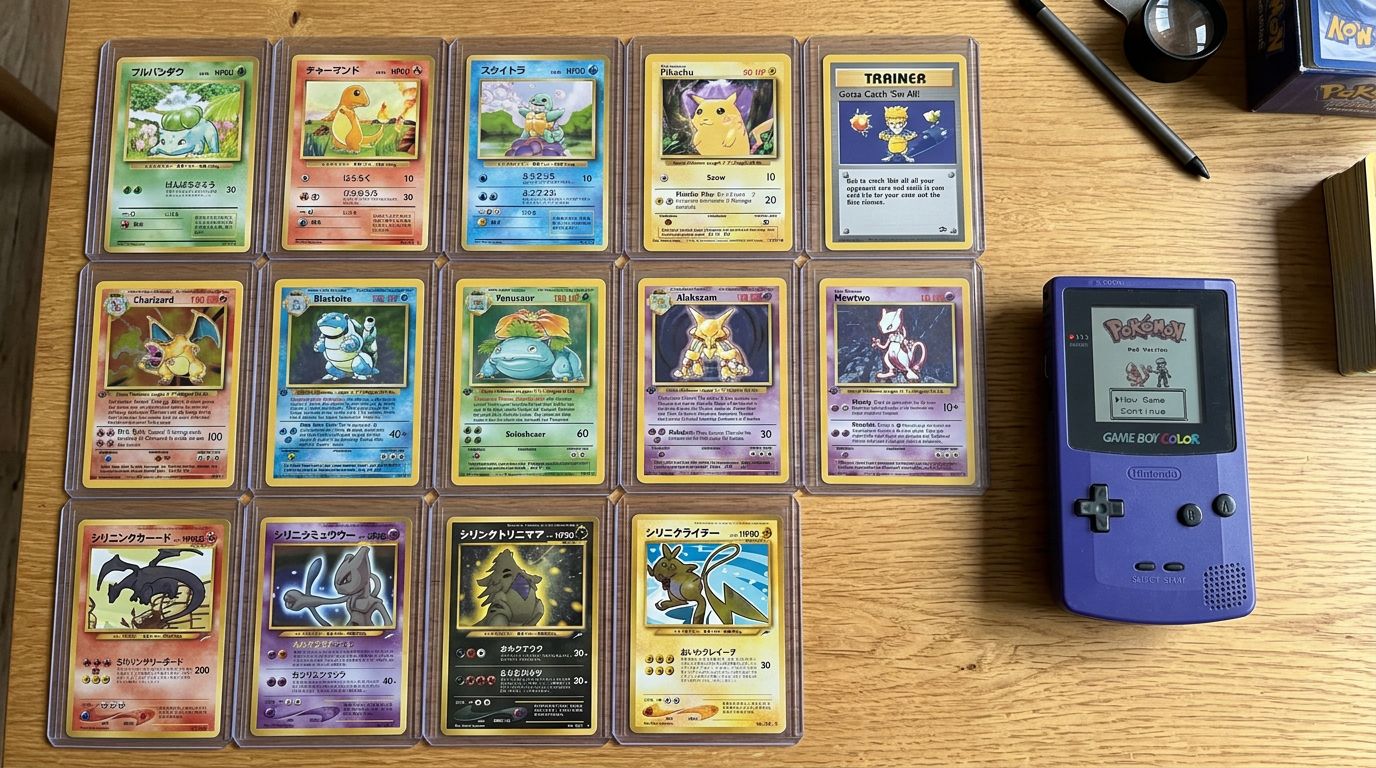
Pokemon cards started as a game. They became a schoolyard obsession, a collector market, a grading category, a sealed product chase and a global hobby.
The history is long, but the basic timeline is easy to understand: Japan first, English Base Set next, Wizards of the Coast vintage, Pokemon USA and The Pokemon Company expansion, then the modern era of illustration rares, graded slabs and worldwide collecting.
The Pokemon Card Game began in Japan in 1996. The first major release, the Japanese 1st Starter & Expansion Pack, launched on October 20, 1996.
This was the true beginning of Pokemon cards. The cards were connected to the original Pokemon video games and the first generation of Pokemon. They gave fans a new way to collect, battle and connect with the characters outside the Game Boy games.
The Japanese release introduced many ideas that still define the Pokemon TCG: Pokemon, Trainer cards, Energy, attacks, evolutions, rarity and deck-building.
English Base Set launched in the United States on January 9, 1999, published by Wizards of the Coast.
This is the set many English-speaking collectors think of as the beginning: Charizard, Blastoise, Venusaur, Pikachu, Mewtwo, Machamp, Alakazam, Chansey and the classic yellow-border design.
English Base Set became a cultural moment because Pokemon was everywhere. The video games, anime, toys, schoolyard trading and booster packs all fed each other. Cards were affordable enough for kids but exciting enough to become serious collectibles decades later.
Wizards of the Coast published the early English Pokemon TCG sets. That period is now called the WOTC era by collectors.
Early WOTC sets included Base Set, Jungle, Fossil, Base Set 2, Team Rocket, Gym Heroes and Gym Challenge.
These sets established vintage English Pokemon collecting. They gave collectors iconic holos, 1st Edition stamps, Shadowless Base Set cards, Dark Pokemon, Gym Leader cards and early promo cards.
For many collectors, this is still the most nostalgic period in Pokemon card history.
The Neo sets introduced Johto Pokemon from the second generation.
Neo Genesis, Neo Discovery, Neo Revelation and Neo Destiny brought Lugia, Typhlosion, Feraligatr, Meganium, Espeon, Umbreon, Houndoom, Celebi and many more into the English card world.
The Neo era also gave collectors Shining Pokemon, which remain some of the most beloved vintage chase cards. Shining Charizard, Shining Mewtwo and the rest of the Shining group helped show that alternate-color Pokemon could become major collector pieces.
Expedition, Aquapolis and Skyridge changed the design of Pokemon cards dramatically. These sets were built around Nintendo's e-Reader accessory and included dot-code strips on the cards.
At the time, the design was unusual. Today, many collectors see e-Reader cards as one of the most interesting vintage eras.
Skyridge is especially important because it was the last English Pokemon set published by Wizards of the Coast. That makes it historically important and often expensive, especially for sealed product and high-grade holos.
After the Wizards of the Coast period, Pokemon USA and The Pokemon Company took over English publishing.
The EX era introduced third-generation Pokemon and a new kind of high-impact chase card: Pokemon-ex. Sets such as EX Ruby & Sapphire, EX Sandstorm, EX Dragon, EX Team Rocket Returns, EX Deoxys and EX Crystal Guardians created a new identity for the hobby.
Gold Star Pokemon became one of the most important collector innovations of the era. Gold Stars were rare, visually distinct and difficult to pull. Today, many Gold Star cards are major vintage-modern bridge pieces.
The next eras continued to evolve the game and collector market.
Diamond & Pearl and Platinum introduced new mechanics, new Pokemon and LV.X cards. HeartGold SoulSilver brought LEGEND cards and Prime cards, while also tapping into nostalgia for Johto.
These eras were not always as heavily collected as Base Set or modern Sword & Shield during their original release, but many cards from these periods have gained respect as collectors look backward.
The Black & White era introduced full art cards, which changed how collectors thought about chase cards. Instead of only chasing traditional holos, collectors started chasing larger artwork, texture and more dramatic card treatments.
The XY era expanded that direction with Mega Evolution cards, EX cards and major anniversary nostalgia through Evolutions. XY Evolutions reminded many collectors of Base Set art and helped bring older fans back into the hobby before the later boom.
Sun & Moon introduced GX cards, Rainbow Rares, Tag Team cards and more premium-feeling chase cards.
This era is important because it pushed modern collecting further toward texture, rarity tiers and special artwork. Cards like Tag Team alternate arts became major collector favorites because they combined strong Pokemon pairings with memorable illustrations.
Sword & Shield was one of the biggest modern collecting periods.
V, VMAX, VSTAR, Trainer Gallery cards and alternate arts gave collectors a huge range of chase cards. Sets such as Evolving Skies, Crown Zenith, Brilliant Stars and Lost Origin helped define the modern chase-card era.
The alternate art boom changed collector behavior. People were no longer chasing only Charizard. They were chasing Umbreon, Giratina, Lugia, Rayquaza, Gengar, Mew and many other artwork-driven cards.
Scarlet & Violet changed the rarity structure and pushed illustration-focused collecting even further.
Illustration Rare and Special Illustration Rare cards became central to modern Pokemon collecting. The cards often show Pokemon in environments, stories or quiet moments rather than only battle poses.
This is a major shift. Pokemon cards are now collected not only for rarity and character popularity, but also for artist identity and emotional artwork.
Grading changed the Pokemon card market.
Companies such as PSA, CGC and Beckett gave collectors a shared language for condition. A PSA 10, CGC Pristine 10 or Beckett Black Label can command a major premium because buyers know the card has been authenticated, graded and encapsulated.
Grading also made population reports, cert verification and auction data part of normal collector research. Tools such as PSA Population Report, PSA Auction Prices, PriceCharting and TCGplayer price guides became part of the hobby.
Pokemon cards survived because they are not only collectibles. They are connected to characters, games, anime, art, competition, nostalgia and community.
Collectors can approach the hobby in many ways:
That flexibility keeps the hobby alive.
Pokemon cards began in Japan in 1996 and reached English collectors in 1999 through Wizards of the Coast Base Set. Since then, the hobby has moved through vintage holos, Shining cards, Gold Stars, EX cards, GX cards, alternate arts, illustration rares and graded slabs.
The reason the history still matters is simple: every modern chase card sits on top of that timeline. Understanding where Pokemon cards came from helps collectors understand why certain cards, sets and eras still carry so much weight today.