Loading article
Loading page
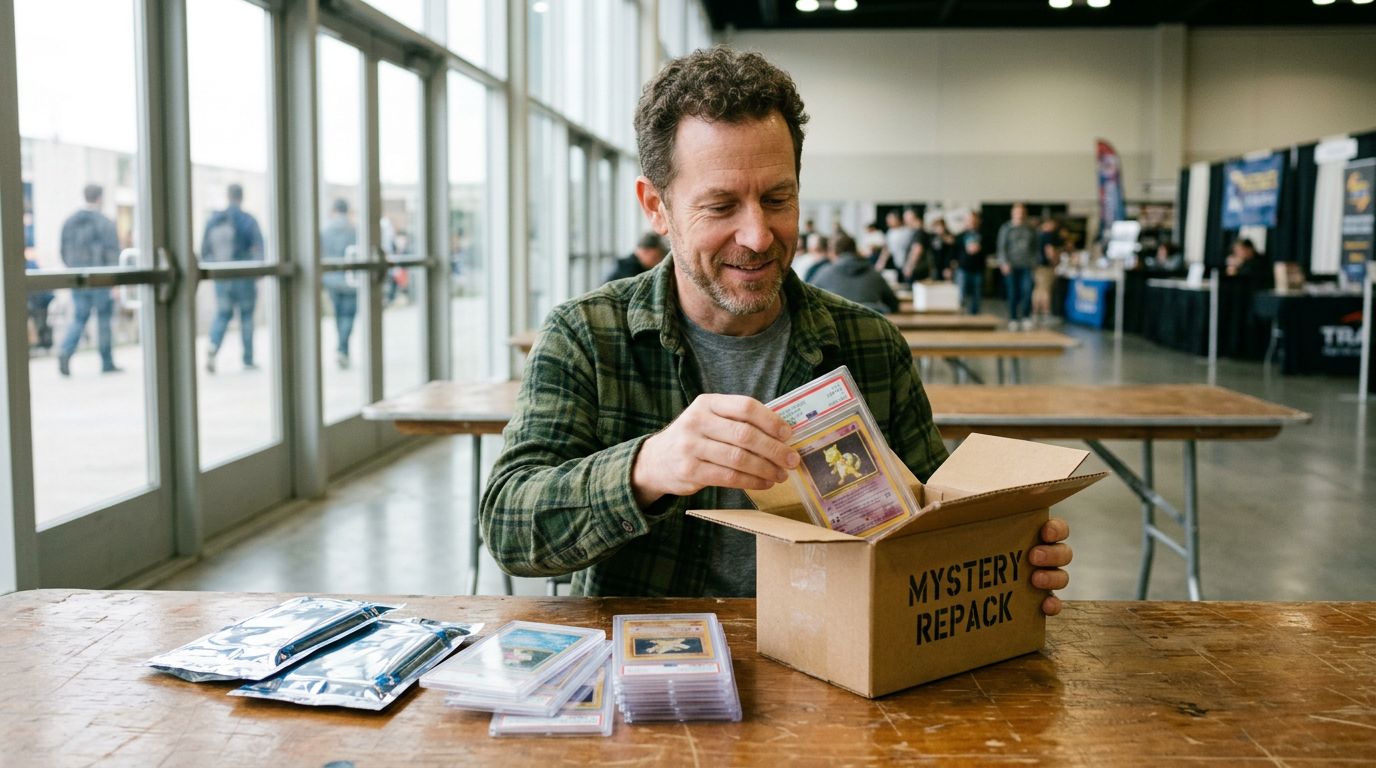
Graded cards have changed the way people collect Pokemon and trading cards. A card is no longer just a card in a sleeve. It can be a PSA 10, CGC Pristine 10, Beckett Black Label, numbered certification, population report entry, display piece and trade asset.
That shift has created a new kind of hobby experience: graded card events, slab reveals, repack products and mystery packs built around authenticated cards.
The idea is simple. Instead of opening raw booster packs and hoping for a hit that still needs to be inspected, collectors open a product or attend an event where the main prize is already graded. The value is clearer, the condition is already judged and the reveal has a stronger collector moment.
Graded card events are growing because slabs solve several collector problems at once.
They make condition easier to understand. They make expensive cards easier to compare. They are easier to display on camera. They are easier to trade at shows. They also create a more dramatic reveal because the grade is part of the excitement.
At major shows, grading has moved closer to the center of the event experience. PSA's official events page says collectors can submit collectibles in person for grading, vaulting and eBay consignment at PSA events. West Coast Card Show also promotes on-site grading and authentication as part of its show-floor experience.
That tells you where the market is going. Grading is no longer only something collectors do by mail after the show. It is part of the live event.
Mystery packs are popular because they combine collecting with a reveal.
A collector pays a fixed price and receives an unknown card, pack or slab from a defined pool. The attraction is the chance to hit a card worth more than the entry price. The risk is receiving a lower-value card.
In Pokemon, this format works especially well because collectors already understand chase cards. Booster packs are a form of mystery product. The difference is that a graded-card mystery pack usually replaces raw pull odds with a curated checklist of existing slabs.
That can be fun when the product is transparent. It can be frustrating when the checklist, floor value, ceiling value or odds are unclear.
A repack is a product made from cards that were previously released, then grouped into a new mystery product by a seller, company or platform.
For example, a repack might contain PSA-graded Pokemon cards. The seller builds a checklist, assigns cards to packs, seals the packs and sells them at a set price.
The important difference is that a repack is not the same as an official Pokemon booster pack. The Pokemon Company controls official booster products. A repack is a secondary-market product built from existing cards.
That does not make every repack bad. It means collectors need to evaluate it differently.
The biggest issue with mystery packs is trust.
Collectors want to know:
Without transparency, a mystery pack can become a poor experience. A collector may think they are buying a fair chance at a premium card, but the actual odds or value distribution may be weak.
This is why third-party oversight is becoming more important.
PSA Verified is one sign that repacks are becoming a more formal part of the hobby. PSA describes the program as third-party validation for trading-card repacks.
The program page says PSA checks that cards are authentic, reviews the checklist for accuracy, randomizes and packs the cards, and seals packs with chain-of-custody oversight. PSA also says the program can confirm that floor and ceiling values match real market data, but does not set retail prices or determine product probabilities.
That last detail matters. Verification can improve trust, but collectors still need to understand the price, checklist and odds before buying.
A strong graded mystery pack should be easy to understand before purchase.
Good signs include:
The best products do not need to hide behind hype. They show the pool and let collectors decide if the risk is worth it.
Be careful when a mystery pack has:
Also be careful with the word "guaranteed." A pack can guarantee a graded card without guaranteeing a good deal. A guaranteed slab is not the same as guaranteed value.
Raw booster packs are exciting, but they leave questions after the pull. Is the card centered? Are there print lines? Is the back clean? Would it grade a 10, 9 or lower?
A graded reveal answers more of those questions immediately. The grade is part of the object. The card is authenticated. The slab protects it. The buyer can compare recent sales for that exact grade.
This is one reason graded-card platforms and events are compelling. They turn the reveal into a more complete collector moment.
It is also a strong reason TOKIO focuses on ready-graded cards. Opening a graded-card product gives collectors a clearer result than opening raw cards and guessing condition afterward.
They are different products.
Official Pokemon booster packs are best when you want the normal TCG opening experience. You are opening cards from a set, chasing official rarities and enjoying the possibility of pulling something fresh.
Graded mystery packs are best when you want a slab-focused experience. You care about graded cards, value ranges, reveal excitement and building a collection around authenticated cards.
Neither format is automatically better. The right choice depends on what kind of risk you enjoy.
Before buying a graded mystery pack, compare the pack price against the stated floor, average and ceiling.
Ask:
If the floor card would make you angry, the product may not be right for you. Mystery products should be treated as entertainment first, not guaranteed profit.
Mystery packs become more exciting at live events because the community is present. People gather around tables. Big pulls get reactions. Vendors record content. Collectors compare hits and trade immediately.
At large shows such as Collect-A-Con, The National or West Coast Card Show, there are enough collectors in one place for graded reveals, trade nights and slab-based deals to feel like part of the event culture.
That community layer is hard to recreate with a normal online listing.
Graded card events and mystery packs are growing because they combine three things collectors already like: trust, value comparison and reveal excitement.
The format is strongest when it is transparent. Public checklist, clear values, fair randomization and recognizable grading all matter. The format is weakest when it relies only on hype.
For collectors, the rule is simple: enjoy the reveal, but understand the pool before you buy.