Loading article
Loading page
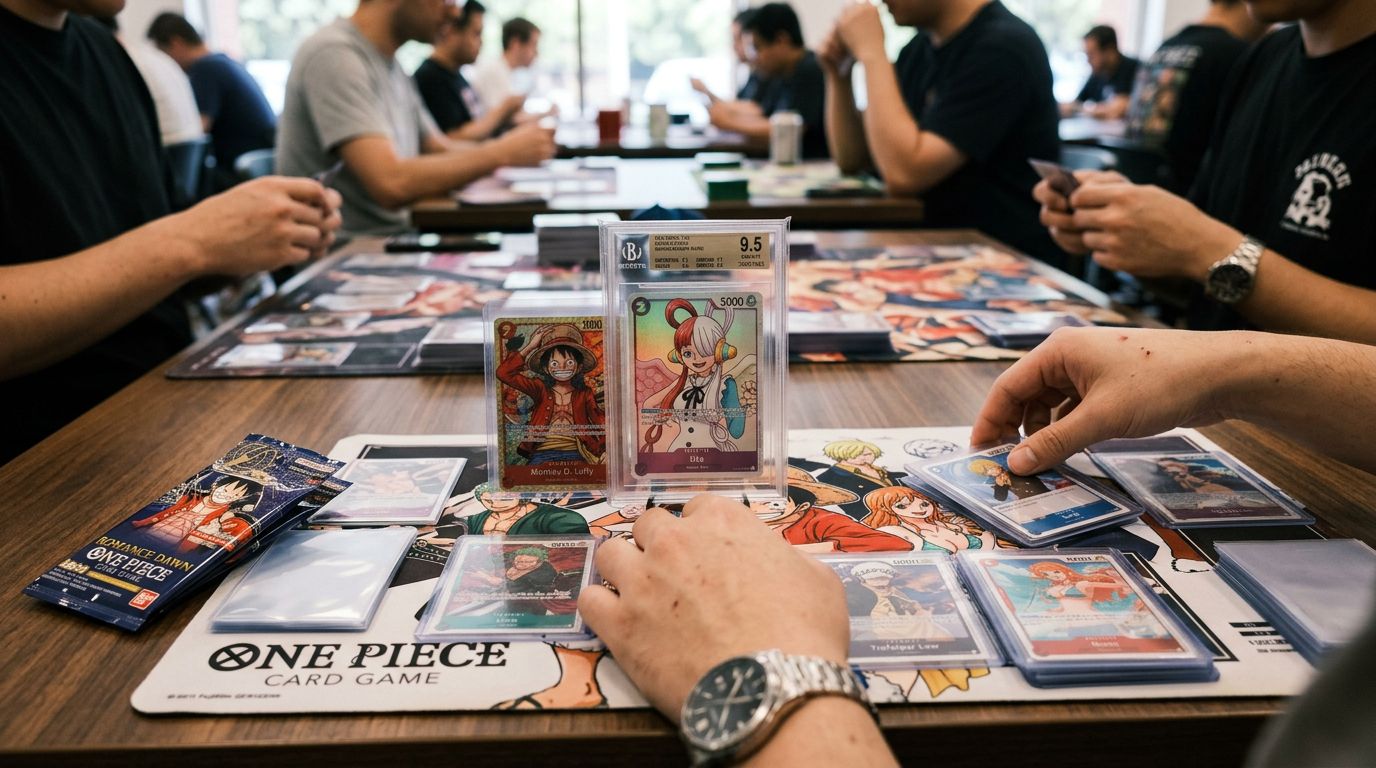
The One Piece Card Game has moved from new arrival to serious TCG contender faster than many collectors expected. It has a massive manga and anime audience, strong character-driven collecting, official organized play, regular product releases, and a secondary market that already treats certain manga rares, leader cards, anniversary products, and graded copies as serious collectibles.
So the real question is not whether One Piece entered the TCG market. It clearly did. The better question is whether it is here to stay.
The short answer: yes, One Piece Card Game has real staying-power signals. But collectors should separate the health of the game from the price of any single card, box, or hype cycle. A TCG can survive for years while individual products rise, fall, reprint, or cool down.
One Piece is not a small license trying to create demand from scratch. It is one of the most recognizable manga and anime franchises in the world, with decades of story, characters, factions, emotional arcs, villains, ships, islands, and fan-favorite moments.
That matters in a trading card game because collectors need reasons to care beyond gameplay. Pokemon has Pikachu, Charizard, Eevee, Umbreon, Mewtwo, Lugia, Gengar, and nostalgia. One Piece has Luffy, Zoro, Nami, Sanji, Law, Ace, Shanks, Boa Hancock, Yamato, Sabo, Kaido, Big Mom, the Straw Hats, the Worst Generation, the Marines, the Warlords, and many more.
A strong TCG needs both players and collectors. One Piece entered with both possible audiences already waiting.
One Piece Card Game has several signs that suggest it is more than a short-term hype product.
The strongest signals are:
No single signal proves permanence. Together, they make a stronger case.
A TCG needs publisher commitment. Without regular products, events, rules support, and distribution, even a popular license can fade.
Bandai has continued to support One Piece Card Game through official product pages, starter decks, booster releases, tournament information, rules updates, and organized play. That ongoing infrastructure matters more than social media hype.
Collectors should watch official release cadence. If a game keeps receiving new sets, official events, updated resources, and visible retail support, that is a better sign than one expensive chase card.
Collecting can drive attention, but organized play gives a TCG rhythm. Players test decks, buy staples, attend events, follow meta shifts, and keep the game active between product releases.
One Piece Card Game has official event and championship support through the official site. That matters because competitive communities create repeat engagement. A collector may buy one chase card and stop. A player keeps watching the format.
The strongest TCGs usually have both: collectors chasing iconic cards and players keeping the game alive week after week.
The collector side is where One Piece becomes especially interesting. The franchise has enough emotional range to support many collecting lanes.
Collectors can build around:
That depth is important. If a TCG only has one chase card or one product people care about, demand is fragile. One Piece has many ways for different collectors to care.
One Piece Card Game became especially visible because of manga rare cards. These cards combine major characters, manga-inspired presentation, scarcity, and strong display appeal. That is a powerful collector formula.
Manga rares are not the whole game, but they helped define the high-end chase lane. They gave collectors something easy to understand: rare card, important character, standout visual treatment, strong demand.
The risk is that chase-card culture can distort expectations. Not every alternate art is a long-term winner. Not every sealed box will contain a life-changing pull. The existence of high-end chase cards makes the game exciting, but collectors still need discipline.
Sealed product is one of the hardest areas to judge. Early One Piece boxes became desirable partly because supply, demand, and collector excitement moved fast. But sealed prices can change when reprints, new waves, restocks, or newer products shift attention.
Sealed product can make sense when:
Sealed product is risky when:
A healthy game does not make every sealed product a good investment.
For collectors who want specific characters, singles are usually the better path. Opening boxes is fun, but buying singles gives you control.
If you want a Zoro leader, an Ace chase, a Nami alternate art, a Shanks card, or a specific manga rare, buying the card directly may cost less than opening sealed product until you hit it. That is true across most TCGs.
The smarter split is simple: open product for enjoyment, buy singles for goals, and treat sealed boxes as a separate collecting lane.
One Piece has already become part of the graded-card conversation. Collectors like slabs for authentication, display, protection, and value comparison. High-end One Piece cards, especially scarce chase cards and iconic character cards, are natural grading candidates.
But grading should be selective. Not every One Piece card deserves a slab. Grading makes the most sense when the card is valuable enough, clean enough, and desirable enough that the grade changes the market.
Collectors should inspect centering, corners, edges, surface, foil, texture, and back condition carefully before grading. Modern cards can still have factory issues, edge wear, print lines, or surface marks.
A strong TCG can still face risks. The most important risks are not hard to see.
One Piece could cool if:
None of those risks mean the game fails. They mean prices can move. A game can remain healthy while some cards or boxes drop.
This is the most important point. One Piece Card Game can be here to stay and still be a bad buy at the wrong price.
A strong game means people keep playing, collecting, opening, discussing, grading, and trading. A strong buy means the specific card or product you choose has a reasonable price, real demand, clean condition, and a clear reason to hold value.
Do not confuse those two ideas.
Before buying, ask:
Pokemon collectors have an advantage when looking at One Piece because many lessons carry over.
You already know that character demand matters. You know that condition matters. You know that chase cards can spike and cool. You know that sealed products can be exciting but risky. You know that graded cards are easier to compare but still need market context.
The difference is that One Piece is younger as a TCG. That means the market is still learning which cards become permanent icons, which sets become historically important, and which prices were just early heat.
For Pokemon collectors, One Piece may be worth exploring, but it should not be treated like Pokemon with a different logo. It has its own characters, rarity structures, product history, player base, and collector psychology.
TOKIO is built for collectors who want clearer context around cards, value, grading, and ownership. That matters as newer TCGs like One Piece become more serious collector markets.
When a card game grows quickly, buyers need better tools and better discipline. They need to understand what they pulled, what condition or grade means, whether the asset is worth holding, and what choices exist next.
That is the same collector problem TOKIO is solving: opening, revealing, tracking, vaulting, selling, and redeeming collectibles with more clarity than a loose pile of cards.
One Piece is another example of why the collector experience is expanding beyond one franchise. Pokemon may still be the anchor for many collectors, but TCG culture is broader now.
The best answer is yes, probably. One Piece has a massive IP, strong characters, official Bandai support, organized play, active product releases, and real collector chase appeal. Those are the ingredients of a durable TCG.
But the disciplined collector answer is more specific: One Piece Card Game is likely here to stay, but not every One Piece card, box, or slab is guaranteed to hold value.
Collect the characters you care about. Learn the sets. Watch official product releases. Compare recent sold prices. Be careful with sealed premiums. Grade selectively. Avoid buying only because something is moving fast.
A lasting TCG rewards collectors who stay patient after the hype.